
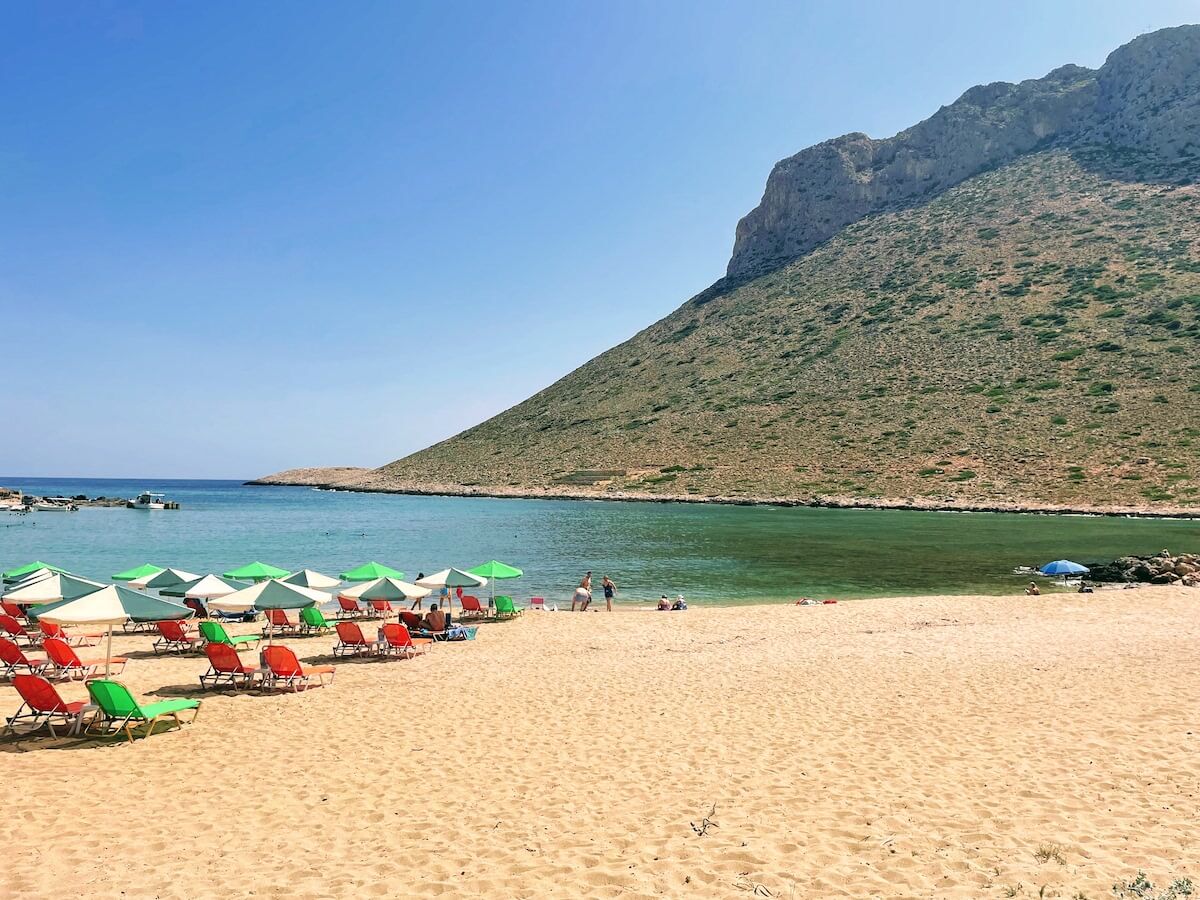
I’ve been to Crete a number of times and always get around by bus (I’m too much of a wuss to drive abroad – I’m from the UK so it’s the other side of the road for me). It’s a busy tourist destination with two major international airports and it does have one of the better bus services (I rated all the Greek islands I’ve visited without a car over in this post here). It’s definitely worth visiting even if you don’t have a car, however its size and nuances of the bus routes mean some trip types will be easier than others. Allow me to explain.
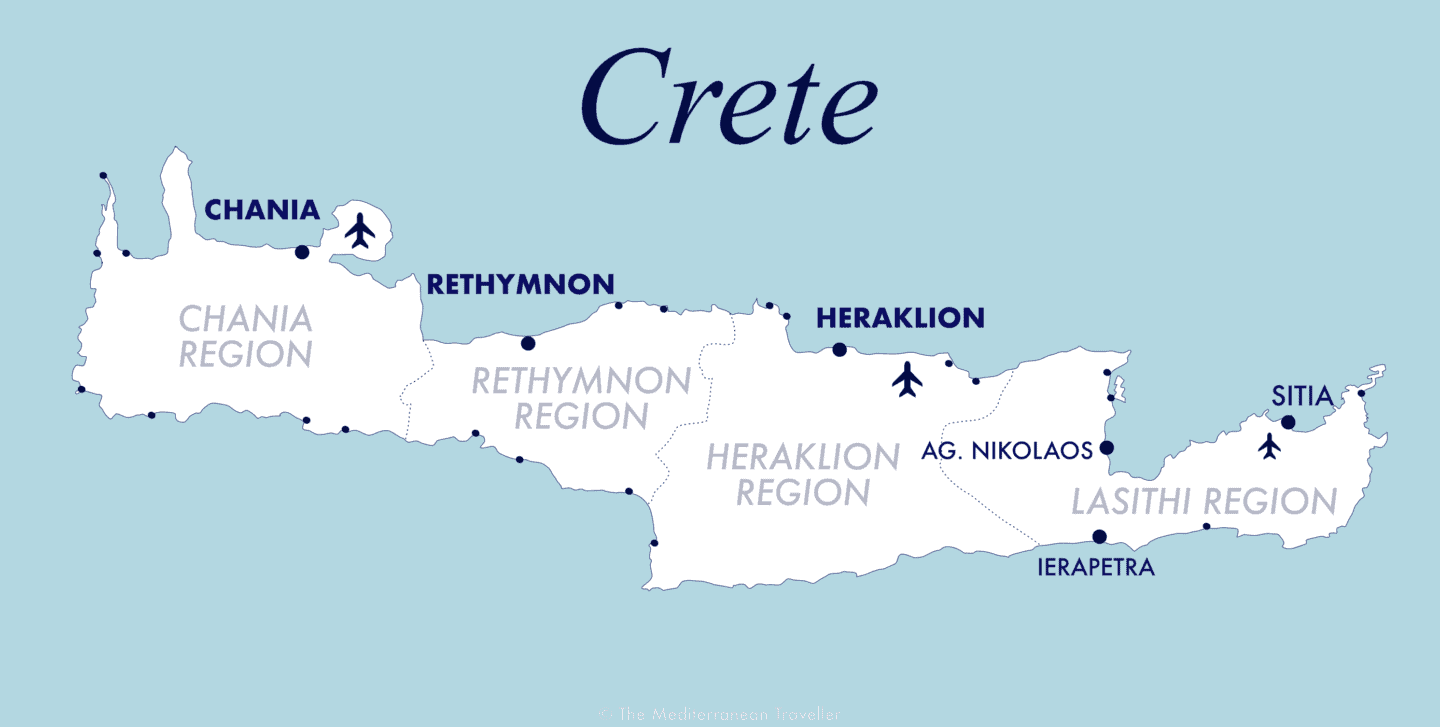
Crete is a long island and drive-time end-to-end is over 5 hours. It’s divided into 4 administrative regions, and each region has its own bus service. Most of the major cities are in the north and are linked by a highway that runs along the coast. Inland is mountainous. What this means practically is that it’s easy to get around the north coast, where buses are frequent and the roads are quick. Especially around Chania and Heraklion, the two busiest tourist areas. It’s moderately easy to get around within the regions – buses exist but are less frequent, and times not always conducive to day trips or tourist visits.
Where it can get tricky is travelling between regions to explore the island, especially if you have a checklist of places to visit beyond the north coast highway. It’s not really possible to do a circular route around the island because you’ll have to go back to the main cities in order to get to the next region. I’ll go into detail on each area further below.
Buses in Greece are generally coaches except in cities where lower buses tend to be used. The public buses are run under an umbrella company called KTEL, which is split into two areas for Crete:
- KTEL Chania and Rethymnon (for west Crete)
- KTEL Heraklion and Lasithi (for east Crete)
The KTEL websites are notoriously clunky and vary in their usefulness. They will usually have the most recent timetable on them somewhere, often in the form of a PDF (the same timetable that’s printed off and stuck to bus shelters), but timetables can change as frequently as weekly so it’s not necessarily useful for planning in advance.
I have seen a new app/website for buses on Crete and will update this page when I manage to find it again!
Chania

Plenty of people fly into Chania International Airport and just visit this region of Crete. And, if that’s your plan, it’s certainly doable by bus. Especially once you combine it with the large variety of excursions on offer – some popular places like Balos are a little bit easier logistically if you book an excursion, but still perfectly possible to do. The beach resorts along the coast (I have a guide here) are well connected by city buses.
The following places are possible to get to by bus or bus/boat excursion:
- Samaria Gorge/Omalos/White Mountains
- Balos and Gramvousa
- Elafonissi
- Falassarna Beach
- Frangokastello
- Paleochora
- Sfakia/Loutro
- Imbros Gorge
- Seitan Limani
- Rethymno
- Heraklion and Knossos
You can also find excursions to some places in the Rethymno region, such as Preveli Beach, during the summer peak, as well as day trips to Santorini. You won’t run out of places to visit by bus or tour.
Even some of the quieter beaches like Kedrodasos are served by the KTEL buses in the high summer. But what you might find is that it only runs once or twice a day, so is difficult to visit more than one place per day, whereas if you rent a car you would probably squeeze in a few stops in one day.
One place it doesn’t necessarily make sense to drive to is the white villages of the Sfakia region (Sfakia-Loutro-Agia Roumeli-Sougia). The road from Chania to Sfakia is full of steep hairpin bends and once you reach Sfakia you’ll have to get around by boat anyway. But if you’re planning on staying in Paleochora it’s worth renting a car for hikes and beaches.
If you haven’t been to Crete before and just want to visit one area then it would be my pick. It’s busy but for good reason – the city is gorgeous and there are so many amazing places to see. It’s not necessarily the most relaxing for a pure beach location but I think it’s great for a city-based trip. I also really love the Paleochora area if you like places that feel wild.
I do have a post with more detail on getting around the city of Chania here: How to Get Around Chania By Bus
Read more: Where to Stay in Chania Old Town
Read more: 10 Most Beautiful Beaches Near Chania
Read more: A Quick Guide to Loutro
Rethymno
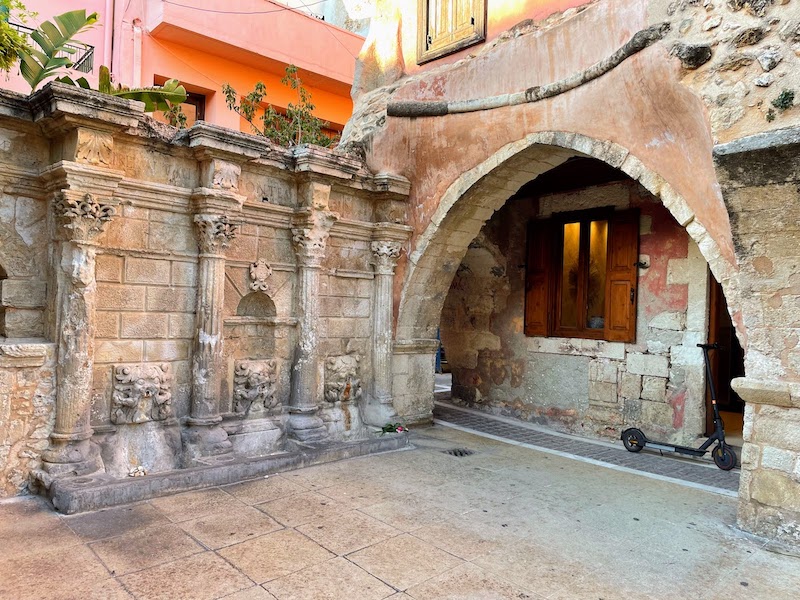
The Rethymno region is similar to Chania but a bit more chilled, less touristy and developed. The transfer from the airport is a bit further, and it doesn’t have the same number of big name attractions, but you can also find excursions to places like Balos and Loutro from the resort areas.
I really love the city of Rethymno as a base. It doesn’t get the cruise ship crowds in the same volume as Chania. Plus the city beach is huge and right next to the Old Town. That’s not to say it isn’t touristy though – the coastline here is still very developed, alternating between smallish resort areas and big resort hotels. But it’s location in between Chania and Heraklion means you can explore in either direction.
The places you can easily visit by bus or tour are:
- Preveli
- Kourtaliotiko Gorge
- Plakias and Kalypso Beach
- Arkadi Monastery
- Heraklion and Knossos
- Chania
- South coast village tour (Spilia, Agia Galini, Matala)
- Lake Kournas
I think it’s definitely worth visiting the Rethymno region without a car. It’s probably going to be a second trip destination for most people, unless you’ve found a particular resort hotel that you like the look of, but I personally prefer it for a beach-focused break with a bit of exploring.
Heraklion

Heraklion is the capital of Crete and its biggest city. The coastline here is very busy and it has the biggest package tourism presence. It’s got some of Greece’s biggest resort areas (Malia/Hersonissos). The city itself suffered a lot of bomb damage during WWII and sadly lost a lot of its historic area; it’s not as charming as Chania or Rethymno but it does have spirit. Most people are probably not going to use it as a base, and in fact there aren’t that many hotels really.
The main draw is its proximity to Knossos, one of the most important archaeological sites in the country (and one of the most fun to visit). And the Archaeological Museum which is in the city centre and is excellent. If you’re even remotely interested in history they’re both worth it, allow a day for both. The bus from the city to Knossos is easy and frequent, but there are also excursions from pretty much every resort on the island.
There’s more of a focus here on the hotels and also on activities (watersports, quad bike tours, catamaran trips, water parks) than sights to sightsee. But by bus/boat you can easily visit:
- Knossos
- Matala
- Dia Island
- Agios Nikolaos and Spinalonga
- Sarakina Gorge
Plus there are a few excursions further afield, to Santorini and to attractions further west.
Read more: How to Spend 1 Day in Heraklion
Lasithi

Lasithi is the quietest region of Crete but the big town of Agios Nikolaos and its surrounding coastline (Plaka, Elounda) is another hotspot for summer tourism. Agios Nikolaos is a harbour town so there’s a heavy emphasis on boat trips, but it’s also close enough to Heraklion (1 hour) for the same excursions and day trips.
- Zeus Cave and Lasithi Plateau
- Heraklion and Knossos
- Dia Island
- Chrissi Island
The west coast is full of amazing beaches, many of them untouched and so quiet compared to other parts of the island. But they’re tricky to reach without a car. The most well known is the palm forest beach at Vai which you can reach by bus from Sitia. The beaches here really need their own trip as it’s a long way by bus from. I’ve occasionally seen group excursions from Malia (like this one) but they’re infrequent and not always available.
Tips on Putting Together An Itinerary

Generally, if you want to visit somewhere within the Chania region you’ll need to stay in the Chania region. If you want to visit somewhere in the Heraklion region, you’ll need to stay in the Heraklion region. The exception is a couple of the super popular destinations close to the main cities, which are easily accessible by road and served by plenty of bus excursions.
I think a single region trip is a great way to approach planning a trip to Crete. But it’s also very popular to have at least two bases for your trip, for example staying in Chania for a few days to explore the west, then a beach hotel outside Heraklion to see Knossos and the Archaeological Museum. It’s easy to fly or ferry in to one and out of the other.
I will say that the one thing I really wished I had a car for was visiting Crete’s mountain villages. The best restaurants tend to be in the mountains or in really remote coastal villages. But there are an increasing number of excursions that will take you up into the hills (I do like the wine tasting/jeep safari combos).
The south coast also has a completely different vibe to the north coast. Where the mountains meet the Libyan Sea, it can feel very remote and wild. However, if you only stay on the south coast you’ll have a limited choice of places you can reach compared to staying in the main cities and north coast resorts, so a north coast/south coast split is another way to do it.
Read more about Crete:
Where to Stay on Crete: Ultimate Beach Resort Guide
Image credits:
Vai : © dziewul / Adobe Stock
All other images © The Mediterranean Traveller