
It’s truly a first-world problem, but trying to narrow down which Greek island to visit is a tough one. If you’ve narrowed it down to Crete and Corfu? Here’s what I have to say on the matter, and a couple of points to consider.
Getting There and Around


How are you planning to get there? Both islands have busy international airports and are two of the easiest places to reach directly from many countries in Europe. If you’re not coming from Europe, there are plenty of connections through Athens. Crete does have ferry connections from Athens but they tend to be overnight and are usually more expensive than the flight.
For Corfu, you’d need to buy a bus ticket which includes the ferry. It’s a long trip and again, often more expensive than the flight. I do find the Crete airports slightly better than Corfu, for some reason the latter seems to really snarl up with crowds on the way out (especially on Fridays which is changeover days for the cruise ships). Crete has two international airports – Chania and Heraklion. Both islands are pretty well geared up for mass tourism, you’ll find lots of excursions and boat trips, taxis and transfers, and rental places.
Another thing to consider is whether you’ll be renting a car for your trip. If you don’t want to drive, Corfu is much smaller and easier to get around by bus. If you enjoy road trips and driving, I think Crete is hard to beat. But it needs some planning – you can’t just drive around it in a day. And you’ll need some nerves because the driving can be pretty hair-raising, especially with hairpin bends in the mountains. There’s a good highway along the north coast though. The roads on Corfu are less intimidating.
The bus system on Crete is pretty good but it depends what you want to visit and how much sightseeing you intend to do. It can be easier to take excursions to the main sights.
I have a whole post about this – Rating the Greek Islands I’ve Visited By Public Transport.
Corfu’s smaller size also means most resorts are under an hour by car from the airport. With Crete, it depends. South coast destinations can involve a long and winding drive, whereas north coast transfers can be short and straightforward.
The Beaches
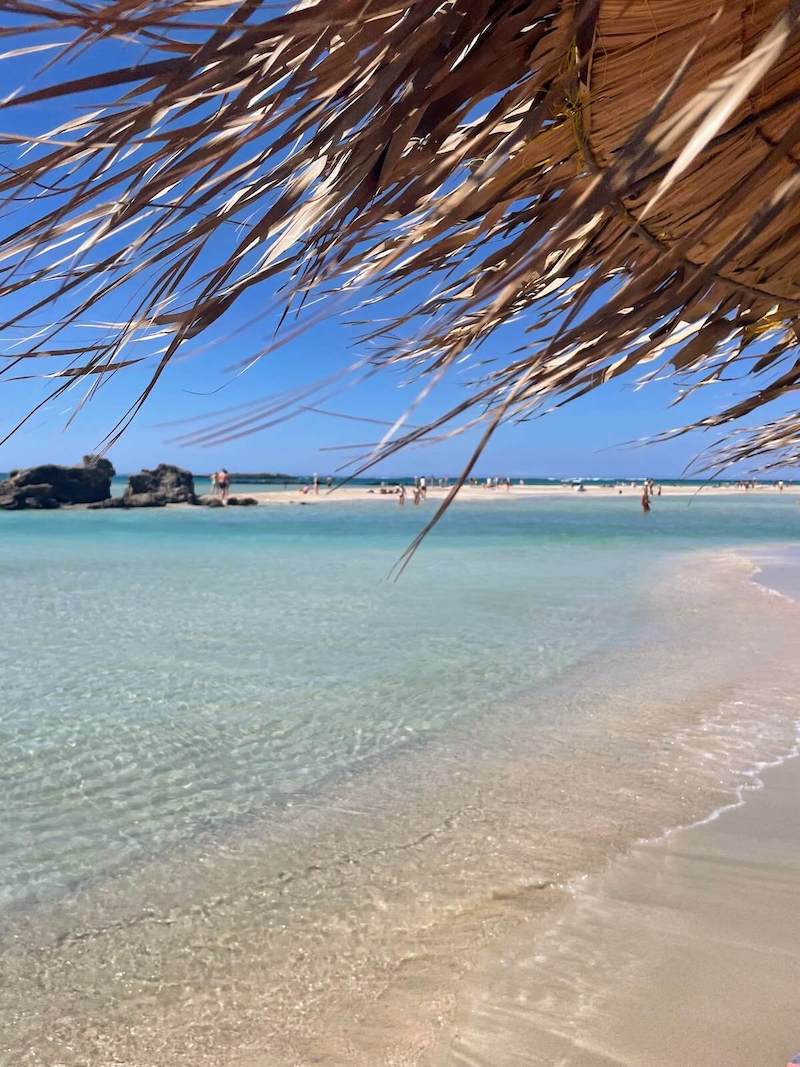

Ok, down to the nitty-gritty. Ultimately, I think Corfu is a better destination for beaches beach holidays. Its coastline is chock full of small and authentic beach resorts with fantastic beaches. Most of the beaches on the west coast are sandy and have amazing beaches. You’ll find cliff beaches there with incredible scenery. The vibe over on the east coast is different – picturesque pine-clad bays, pebble beaches, shallow seas, and epic views of the mainland and Albania on the horizon. Despite all the crowds, there are still wild and quiet beaches if you know where to look.
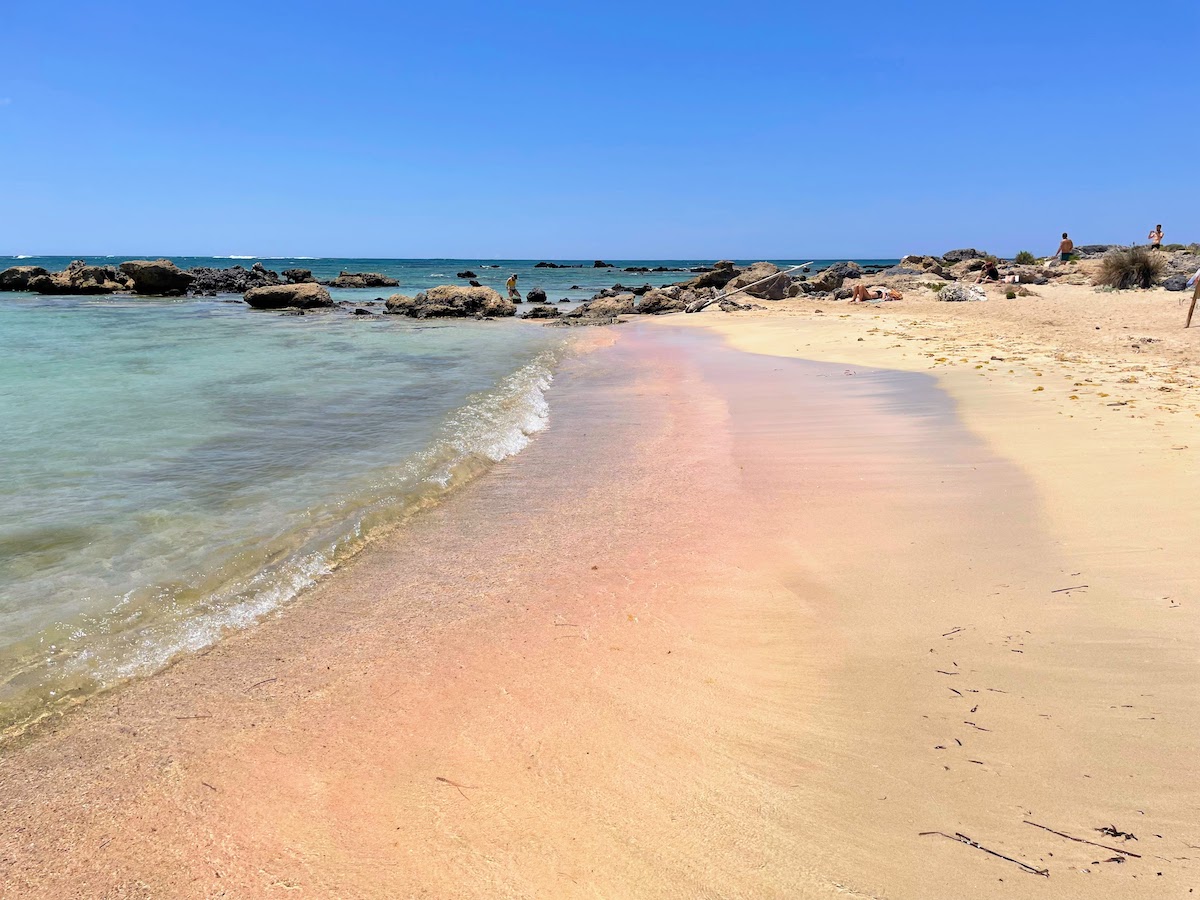
Crete has a much wider variety of beaches, and scenery in general. It has some absolute stunners (like Balos and Elafonisi) that regularly pop up in best-of lists for good reason, but generally you’ll have to travel to reach them. A lot of the best sandy beaches are in protected areas without many hotels nearby (which is great!).
Crete’s north coast is one of the more built-up and developed coastal areas in Greece. If you prefer places to be lively and have lots of activities, watersports, and bars, then you’ll probably be happier in Crete than on Corfu. Especially if you enjoy hiking – it’s much easier to find organised hikes on Crete.
The downside, for me, is that – with a few exceptions – it’s harder to find small and charming resorts directly on a beautiful beach, especially in the north. I think this is where Corfu really pulls ahead, especially if you’re on a budget, don’t want a long drive, or have kids in tow.
Crete’s south coast is mountainous and wild, with some amazing scenery and traditional-feeling resorts like Plakias, Agia Galini, Paleochora, and the beautiful Loutro. I definitely recommend the south if you’re a seasoned island hopper and enjoy exploring Greece. A lot of the beaches are a dark and gritty kind of sand or shingle, but are absolutely wonderful for swimming (especially with the mountains as your backdrop). There are also some fantastic beaches in the east of the island, but it does require driving.
Sometimes I find the heat in Crete a bit much in the summer. It seems to get stuck as it hits the island from the north. A lot of the landscape is harsh and barren (some lush areas in the mountains though). Corfu has more consistent breeze, though it is more humid. I prefer Crete in spring and autumn when it’s usually still reliably warm. The season in Corfu is a little bit shorter and the weather in shoulder season a bit of a gamble, with big storms sometimes appearing in September.
Corfu is also better for boat trips. It’s much greener and I love emerald-seas. There of shallow beaches suitable for kids. It’s also made a really big effort with accessibility.
> Where to Stay in Corfu: Ultimate Beach Resort Guide
> Where to Stay in Crete: Ultimate Beach Resort Guide
The Vibe
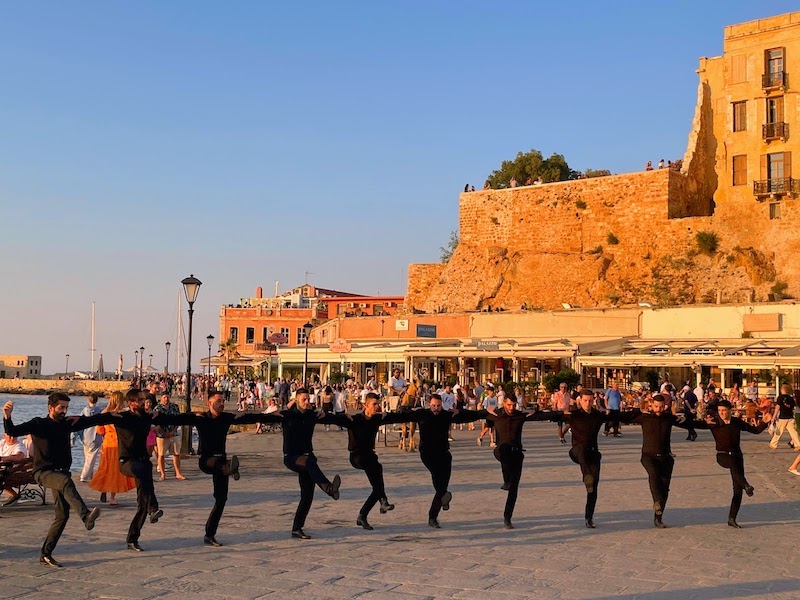
Crete overall wins for me, with a caveat. I love the cities, they all have a great youthful buzz, and you don’t have to go far inland to get off the beaten track and visit its amazing mountain villages to explore. Crete is somehow both more rustic and more cosmopolitan. It’s a big island with a long and epic history, a strong sense of culture and identity, and a much bigger population than Corfu. There’s a huge emphasis on local produce, so food and tavernas are generally incredible.
But the busy beach resort areas in the north are mostly too commercial for me. I’m not madly in love with any of the north coast beaches and would rather stay in the cities.
Crete is so big that it doesn’t really have that kind of ‘island vibe’ that you get on smaller islands, although the south coast does have some of that feeling.
But Corfu, and the rest of the Ionian Islands, have a bit of a different feel to the islands in the Aegean. Perhaps it’s the influence from nearby Italy, or the remnants of British and French rule. Corfu has its own thing going on, and its thing is a good thing, Crete feels more intensely Greek.
The Cities
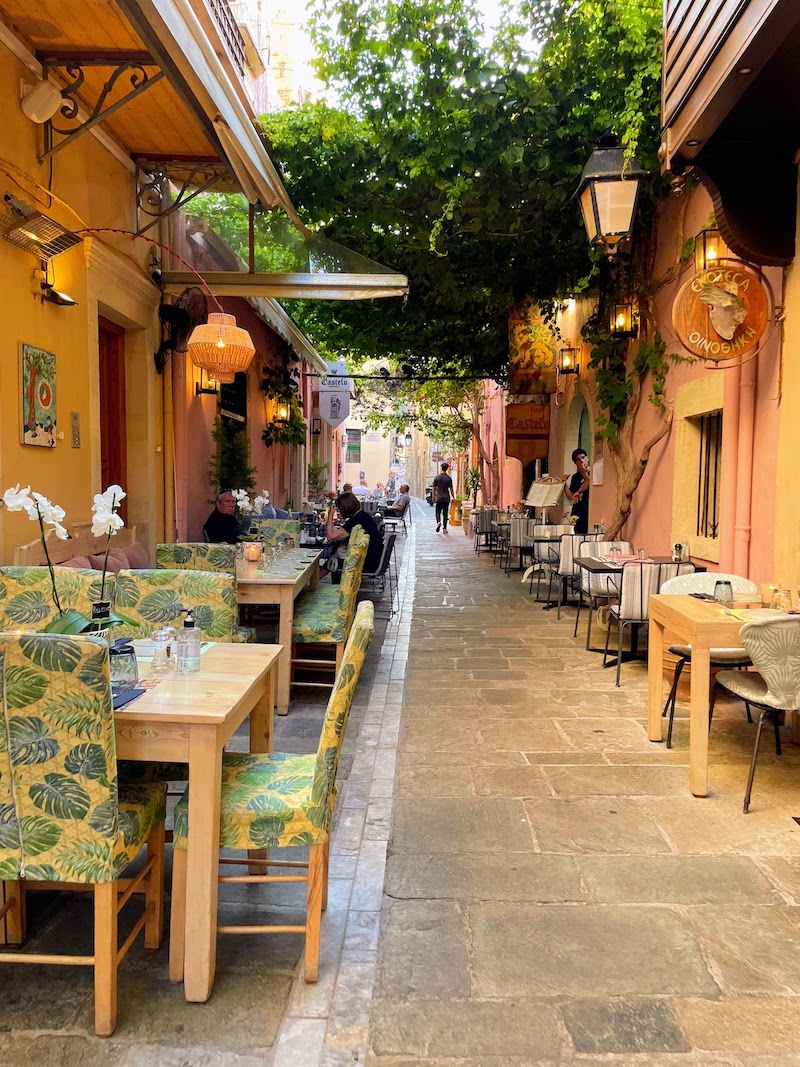
Chania and Rethymnon both have incredibly picturesque Venetian Old Towns amongst the urban sprawl, with long sandy beaches on the outskirts. Chania is amazing but incredibly busy with tourists – sometimes it feels a bit much. The beach resorts around Rethymnon are smaller and have a much more individual feel. The biggest and most commercial resorts are found near Heraklion (Malia, Hersonissos), but there are also some quiet resorts (like Agia Pelagia) surprisingly close to the city. Heraklion suffered a lot of damage in WWII and doesn’t have the charming old areas that the others do (though there are a few streets), it tends to feel noisy and full of construction so I don’t recommend it as a base, but it is worth a day or half day (especially to visit the Archaeological Museum).
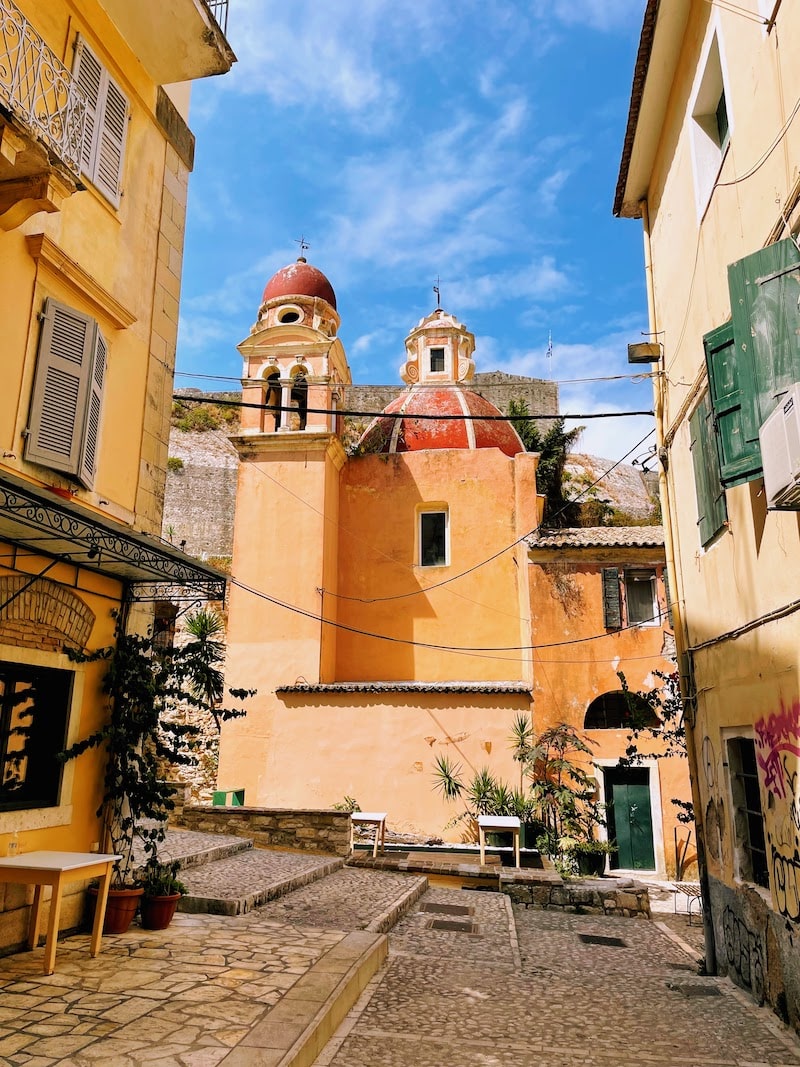
I love Chania, but I think I love Corfu Town even more. Even though it’s not short of tourists (including just as many cruise shippers as Chania), it still feels like a local place that hasn’t been entirely taken over by tourism. The downside is that the choice of accommodation is nowhere near as big. And the beach areas immediately outside the city aren’t quite so good, although there are a few scenic areas with good luxury resorts. Corfu Town isn’t so urban, it feels a bit more like a small historic town, similar to what you’d find in Italy. Chania’s maybe a bit more fun, Corfu Town a bit classier, and Rethymnon the most chilled.
> Where to Stay in Chania Old Town
> The Best Beach Resorts Near Chania
> What to Do with 1 Day in Heraklion
> Ultimate Guide to Corfu Old Town

Luxury Resorts
If you’re in the market for a luxury holiday then here’s my call. Crete, being a lot bigger and more developed, has many more hotels in the luxury segment. Especially affordable all-inclusive. You’ll find them outside the cities, and there’s a cluster in the area around Plaka and Elounda which has become a luxury enclave. If you’re after swim-up pools (like Phāea Cretan Malia), waterparks, or want somewhere walkable to lively areas then Crete is your best bet.
But.
For luxury hotels directly on a sandy beach, Corfu wins. And for old-world glamour (like Grecotel Corfu Imperial) or quiet adults-only hotels in serene landscapes, I’d also probably check out Corfu first. If you picture yourself jetting around the coast to secluded bay on a private boat in a haze of Euro-summer vibes, then Corfu is the one.
> Corfu’s Best Luxury Hotels Compared
The Nicest Bits of Corfu

Corfu is a busy island but the coastline isn’t overdeveloped. Even the resorts immediately outside Corfu Town feel more like villages. But if you want somewhere really special, head to the NE Coast. This is the ‘poshest’ bit of Corfu – it’s home to lots small scenic pebble bays surrounded by pine forest that are best explored by boat. There are a few hotels but it’s mostly villa territory around here, unless you head to nearby Kassiopi.
If you prefer luxury resorts, lots of new ones have popped up on the SE coast recently, around Moraitika-Messonghi. This part of the coast is traditional and quiet, with long stretches of pebble beach. Nearer Corfu Town, there are clusters of resort hotels on the pretty headlands near Gouvia.
For sandy beaches, I like the dramatic scenery of west coast beaches like Glyfada and Agios Gordios.
> A Quick Guide to North East Corfu
> A Quick Guide to North West Corfu
The Nicest Bits of Crete
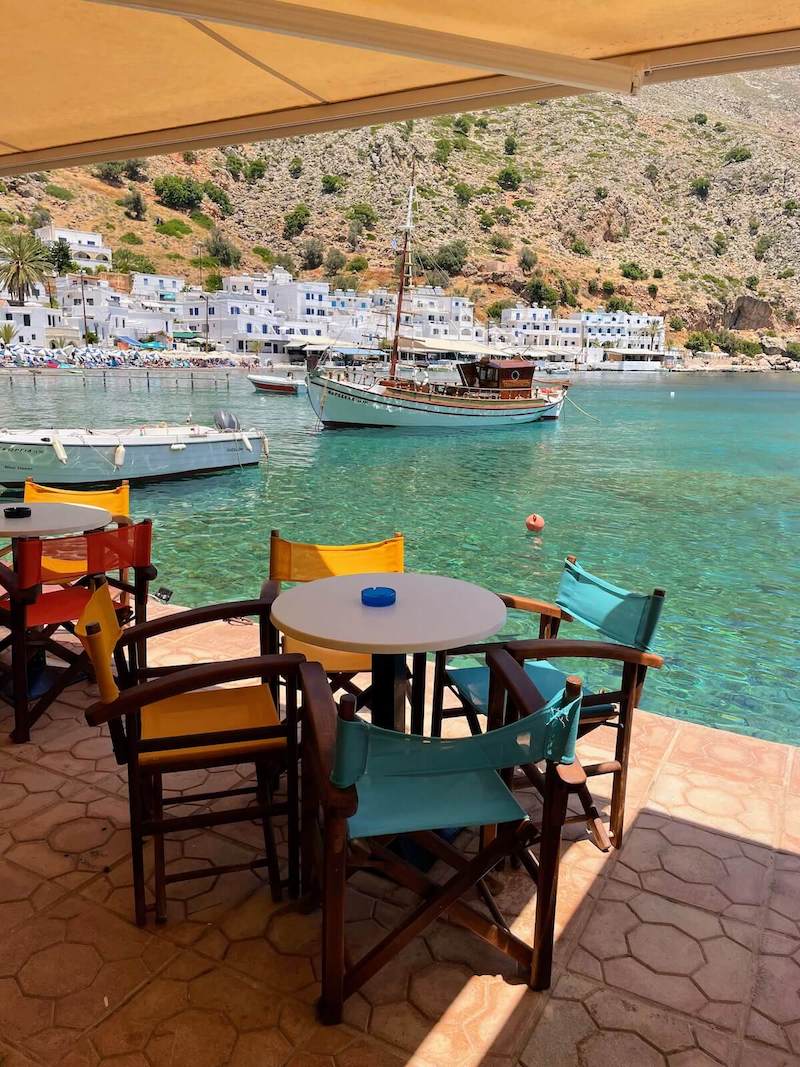
If I had to recommend one bit of Crete it would be the south west. The west coast is home to the most amazing sandy beaches – not just Elafonisi and Balos, but also Falassarna and Kedrodasos. And round the corner on the south coast you’ve got Paleochora and the Sfakia area, where the mountains meet the sea and you’ll find villages that you can only reach by boat (and also the island of Gavdos – the most southerly island in Greece). There’s nothing quite like floating in the Libyan Sea looking up at the stars, breathing in the intense aroma of herbs, spending your days hunting down remote beaches or hidden gorges. It has a sense of wilderness that is intoxicating, and it doesn’t feel like anywhere else in Greece.
> A Quick Guide to Agia Roumeli
Chania is amazing in shoulder season, but Rethymnon is a massively underrated place and the beach there is right next to the Old Town. I also really like Agios Nikolaos – it’s a buzzing harbour town, and the gateway to the quieter end of Crete which is perfect for exploring by car.
Read more:
Love Greece, Hate Long Transfers? The Best Places Near International Airports
7 Surprisingly Affordable Places to Visit in Greece
10 Best Greek Islands for Beaches
10 Best Sandy Beach Resorts in Greece
Greece: Ultimate Beach Resort Guide
All images © The Mediterranean Traveller