

Corfu is a classic travel destination with enduring appeal.
This island is a showstopper – it has dramatic coastal scenery, a UNESCO-listed old town, a unique history, and plenty of sandy beaches. There’s nowhere else in Greece quite like it.
If you’ve watched the love the Durrells then, like me, you’ll have fallen in love with its landscapes and friendly spirit.
Sure, Corfu is not exactly under the radar. It’s one of the most popular tourist destinations in Greece. In 2019 almost 1.5 million air passengers landed at Corfu Ioannis Kapodistrias Airport. It’s also a major cruise port destination. But it’s big enough, and has enough beaches, that you can always find a quieter spot.
There must be some downsides though?
Here are 7 things that I really love about Corfu (and 2, not so much):
Corfu Old Town

Corfu Town is without a doubt one of the most beautiful and unique old towns in Europe. The medieval heart of the island capital is inscribed on the UNESCO World Heritage list and dates back to the 8th century BC.
Corfu Town has an atmospheric warren of streets packed with cafes, restaurants, and shops, as well as plenty of sites of historic interest. In fact, Corfu is one of the best Greek islands for history geeks, you’ll even find some small Roman ruins dotted around the island.
The town’s stately ochre and rose buildings and 3 forts were constructed by the Venetians who occupied the island, along with most of the Adriatic, from 1401-1797.
In later centuries the British and the French also occupied the island, both have left their mark – notably in the form of the cricket lawn and arcaded promenade that form the town’s main square.
The Incredible Scenery

Of all the Greek islands, Corfu is possibly the most lush and green. It’s certainly up there.
The highest peak on Corfu is Mount Pantokrator in the north. The most splendid scenery can be found on the north-west and north-east shores, particularly around famed honeypot Paleokastritsa where tall cypress pines bring a feeling of elegance to the rugged coastline.
There are all sorts of beaches, from spectacular cliff beaches to vast lagoon sands.
Inland you’ll find hikes along donkey trails leading to traditional villages.
It’s a walker’s paradise and visitors walking the Corfu Trail are increasing every year.
Sand and Sunset Cocktails in the North-West

These days many will have heard of Paleokastritsa, it’s one of the most popular resorts and daytrip destinations. But it’s by no means the only pretty spot on the north-west coast.
Many of the main west coast resort towns – Arillas, Agios Georgios NW, Agios Gordios, Glyfada – have stunning locations, with generous sandy beaches hugged by steep hills.
And of course their west-facing orientation makes for long evenings and perfect sunsets.
Read more: A Quick Overview of North-West Corfu
All the Boat Trips
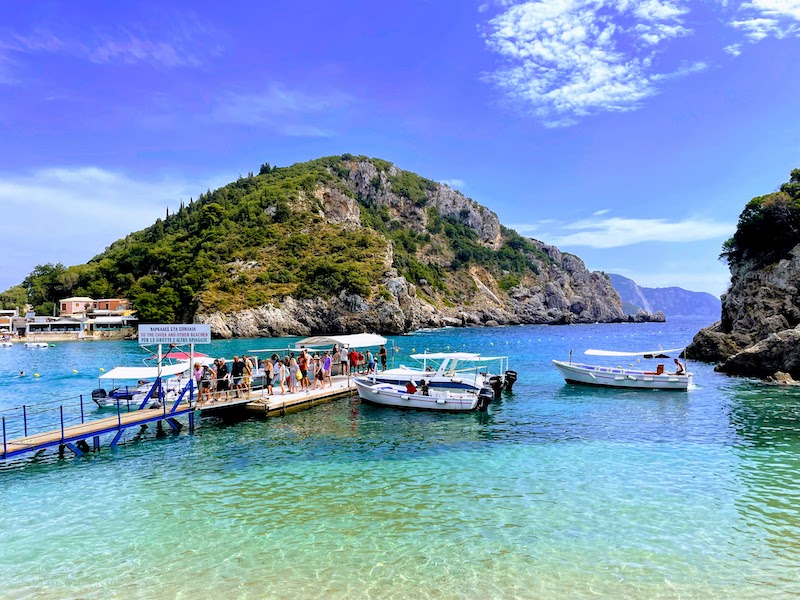
One of the best ways to discover Corfu’s amazing coastline is by boat.
Boat rental is common here – you can rent your own little motorboat for a few hours, no experience necessary. The rental shops will explain it all and hand you a map.
Don’t fancy being captain for a day? There are plenty of organised boat trips too, especially around Paleokastritsa and Kassiopi.
From Paleokastritsa there are small water ferries to some of the impressive beaches around the coast, as well as to the Instagram-famous La Grotta cliff bar.
Whereas from Kassiopi the day-long boat trips often include snorkeling and a BBQ lunch.
If you don’t mind going further afield then organised excursions will whisk you to Paxos where you’ll find some of the most beautiful turquoise water you’ve ever seen.
The Posh North-East

The coastline from Kassiopi down to Barbati has a character and beauty all of its own.
It has a long series of serene pebble coves with fantastic snorkelling and walking. The steep terrain means it hasn’t been overdeveloped, with discrete villas tucked in amongst olive groves and just the occasional hotel.
It appeals upmarket crowd, especially Brits, who zip up and down the coast in motorboats in search of seafood tavernas and hidden spots.
It’s also known for its connection with the Durrells – don’t miss lunch at the White House in Kalami if you’re a fan.
My own personal favourite beach is Barbati where the water is an iridescent green and you can sit in the shade under tamarisk trees on the beach.
Read more: A Quick Guide to North-East Corfu
The Quiet South
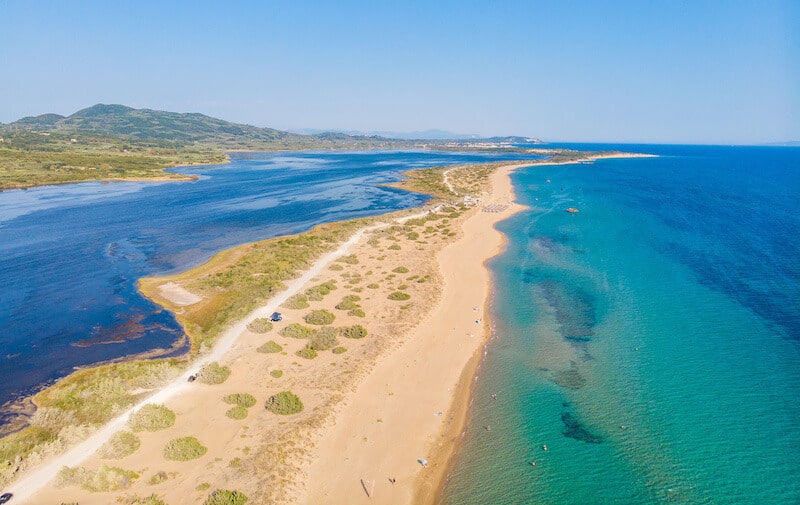
The north is beautiful – but everyone knows it. So where do you go if you want to find a beach that isn’t packed with people and lined with sunloungers?
Just take your car and head south of Corfu Town where everything is much quieter (at least until you reach Kavos, at the very tip of the island).
The windswept dune sands of Halikounas beach on the edge of Lake Korission are one such destination. There is one small organised area with a bar and the rest is untouched, loved by locals and kitesurfers.
Continue on to Issos, Gardenos, Megas Choros, and Arkoudilas.
With the exception of Kavos, the resorts in the south of Corfu also tend to be smaller and more traditional. There’s Agios Georgios S for sands and the Moraitika/Messonghi area for pebbles.
The Food and Drink
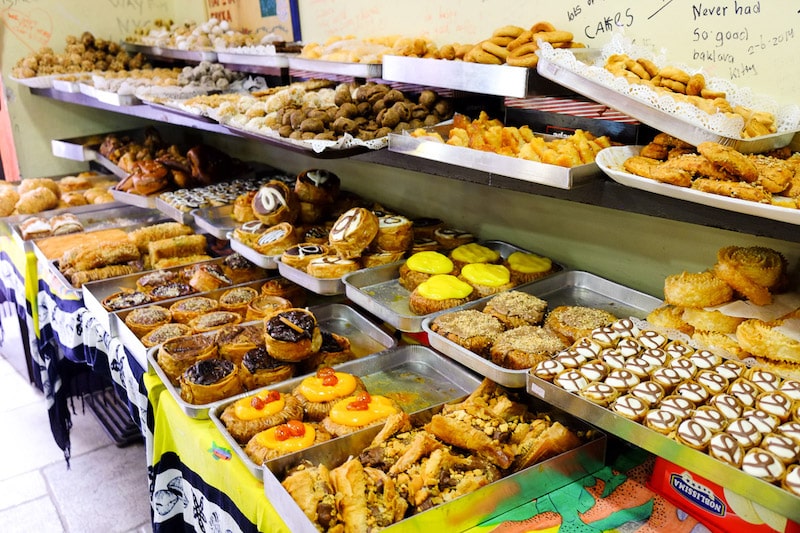
Corfu is a great island for foodies with plenty of high-quality and unique fare on offer.
You’ll find all of the standard taverna classics but also traditional dishes which have an Italian influence such as pastitsada, sofrito, tsigareli, bourdetto and gouvetsi.
There’s plenty of local produce to be found, especially the local olive oil as well as liqueur and treats made from the kumquats which grow so abundantly on the island. The famous ginger beer is a nod to the British legacy, and the Corfu Beers are brewed in Arillas.
There are some wonderful restaurants and vineyards around the island too.
So far so good. So what are the downsides?
The Weather

It’s worth noting that the weather on Corfu is slightly different to islands in the Aegean, for example.
The problem with those big beautiful mountains (as well as the ones over the water in Albania) is that they bring clouds and rain. That’s why everything you see is so green! Sun-worshippers might be disappointed by the number of cloudy days.
Corfu is a little big cooler than most Greek islands (not a bad thing in August) but can get very humid. The summer season is slightly shorter than in the Aegean too.
Lush green islands are also the worst for mosquitoes, just a heads-up!
Tired resorts
It must be said that some beach resorts have not weathered the sands of time so well.
There are several resorts which have been on a downward spiral since their heyday in the 70s and 80s, hit hard during the Crisis, and have yet to really see the upspring of regeneration (although the shoots are there).
There are areas around Ipsos, Dassia, Benitses, and even Gouvia where you’ll find derelict buildings, stray dogs, and plastic waste in the sea. With things on the up now, hopefully it won’t be long before these places get the TLC they deserve.
Read more:
Where to Stay on Corfu: Ultimate Beach Resort Guide
10 Best Sandy Beach Resorts in Greece
Image credits:
Halikounas beach © Simon Dannhauer / Adobe Stock
All other images © The Mediterranean Traveller
