
Renting a car gives you ultimate flexibility when you’re abroad as it allows you to get off the beaten track and explore at your leisure. But is it necessary? Of course not.
And it comes with a downside too – parking hassles, the stress of navigating unfamiliar roads and conditions, plus dealing with the rental companies. Personally, I prefer not to drive when I’m abroad because of the whole ‘other side of the road’ thing. I’m a passenger princess and happy to sit on a bus and watch the world go by.
But not all Greek islands were created equal when it comes to exploring without a car.
So here I’m going to rate all of the Greek Islands I’ve visited, based on how easy or difficult they are to reach and explore by public transport.

Aegina – 6/10. I’ve been to Aegina a couple of times for a day trip but must confess I’ve never made it out of Aegina Town. There are buses that go to Agia Marina, Perdika, the Temple of Aphaia, and Agios Nektarios, which are the main places that tourists will want to go, although visiting them all in one day would probably not be possible as you have to double back on yourself to Aegina Town. I’ve docked it a couple of points because the nicer beaches are at Agia Marina or Perdika.
Andros – 3/10. Bus routes on Andros are limited. You can go from Gavrio to the lovely beach town of Batsi and the main town Chora, but that’s about it. Andros has amazing beaches and hikes but logistically it’s a struggle. I still recommend a short trip here though – the fast ferry from Rafina is only 45 minutes, and a couple of days exploring Batsi and Chora is perfect. There are some beaches that you can walk to.
Agistri – 9/10. Agistri is one of my favourite Greek islands. It’s perfect if you’re looking for a simple getaway . Agistri is not a fancy place, it’s small and there are some great beaches and hikes if you don’t mind a bit of exploring to reach them. Most ferries dock in Skala and it’s my preferred place to stay (I like Rosy’s Little Village). You can get the bus or hike a bike to reach Dragonera or Aponisos beaches or head to Megalochori for lunch.
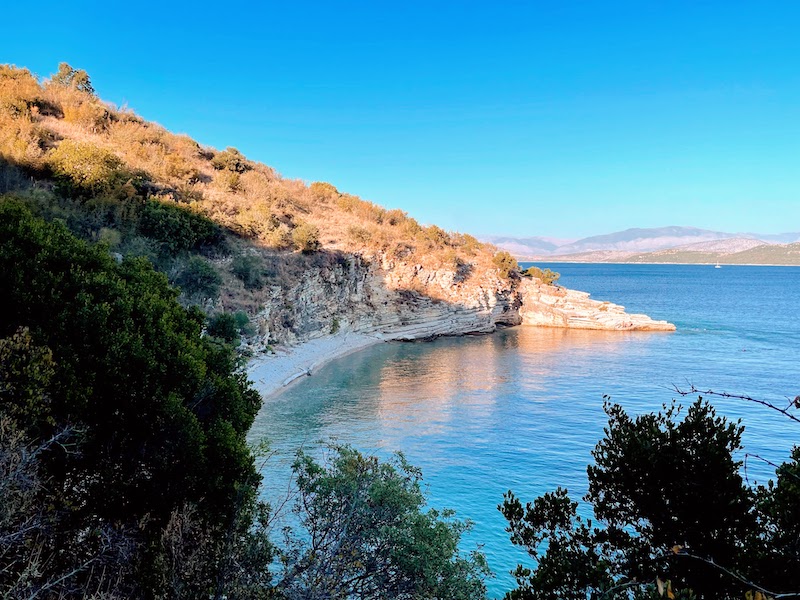
Corfu – 8/10. One of the most popular islands for international arrivals, and I think it’s one of the easiest to explore by bus – with the caveat that if there are lots of places that you want to explore around the island then it makes sense to stay in or close to Corfu Town. If you’re staying in a coastal area then you’re going to be roughly limited to that side of the island. For example, if you stay in Kassiopi there are lots of nice places in the NE Coast you can reach by bus that are close to Kassiopi or on the route to Corfu Town, or in summer on the route to Sidari, but visiting the west coast is more challenging. But you can reach pretty much everywhere by bus if you’re determined enough. There are also lots of great boat trips and day trips in Corfu.
I’ve written extensively about Corfu. You can find more tips on the buses here: How to Get Around Corfu by Bus
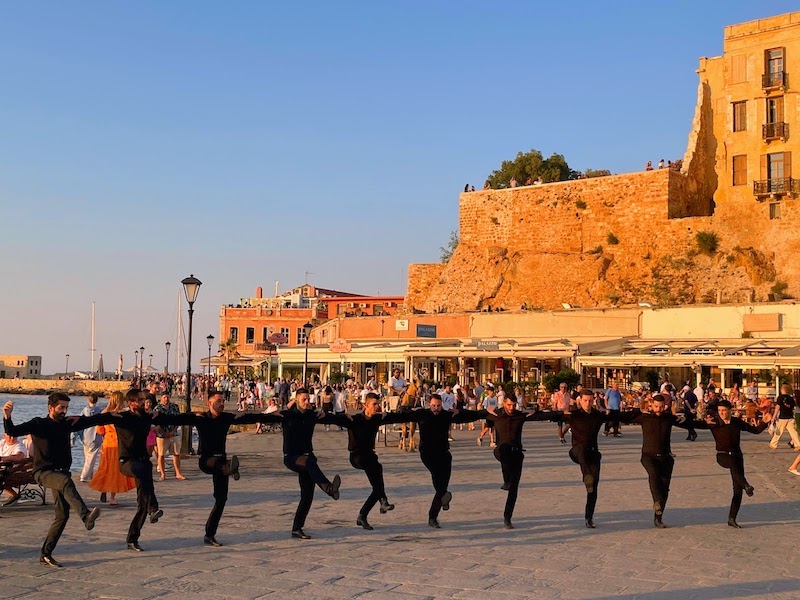
Crete – 8/10. Crete also has a pretty good bus service with helpful routes for tourists. I docked it two points just because it’s huge and travelling between the different regions can be challenging and journey times can be long. Especially where winding mountain roads are involved. Travel between the cities, airports, and main resort areas on the north coast is easy. Travelling between somewhere on the south coast in the Chania region to somewhere in the south coast in the Heraklion region? That’s going to be long and tedious. There are many excursions and boat trips available too, especially in the Chania area.
More tips on this here: How to Get Around Chania by Bus
Gavdos – 6/10. There is a bus service on the tiny island of Gavdos which is south of Crete, however I didn’t actually use it on my very brief trip there. I was picked up from the port by my accommodation hosts (I stayed at Metochi), and then I walked to the beach at Sarakiniko. I gave it a 6/10 because the buses are coordinated with the ferries so at least you can leave the harbour (which is more than can be said for some islands!) but options for exploring the island are limited. Bring your walking shoes.
Hydra – 10/10. Hydra gets the perfect score because it’s a car-free island, no need to use buses at all! The only settlement on this long, spindly island is Hydra Town (and the bays nearby at Vlichos and Mandraki), the rest is all craggy rocks. There are beaches around the island you can visit by water taxi or private boat.
Ithaki – 1/10. Unfortunately the easiest way to get to Ithaki is the ferry from Sami on Kefalonia to the port at Piso Aetos, but there is no bus from Piso Aetos to Vathy (the main town), or Frikes or Kioni (the other places you’re likely to want to go), so Ithaki fails at the first hurdle. Even buses from Vathy are very limited. It’s definitely one of those places where it’s helpful to have a car or a yacht, or at least the phone number for a taxi. I visited on a day trip from Kefalonia. Once I have a yacht, I’m sure it will become one of my favourite boltholes.
Kastos and Kalamos – 4/10. These are two small islands in the Ionian I also visited by boat trip (the MS Christina from Lefkada). I think the only other way to reach them is by ferry from the mainland. The beaches here are so stunning, I’d love to go back and maroon myself on Kastos for a few days though. Definitely no buses needed here, the populations are tiny. But hard to reach. Again, a yacht would be handy.
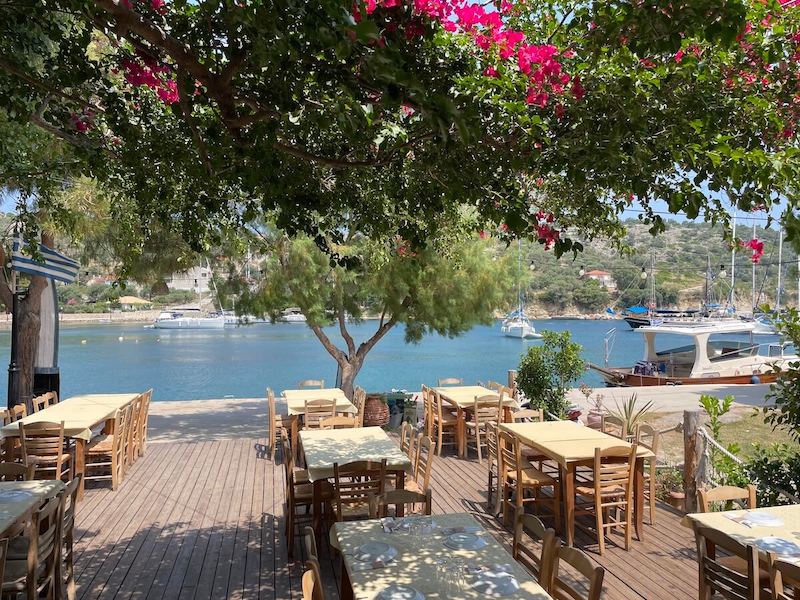
Kefalonia – 2/10. I found Kefalonia one of the most frustrating destinations to explore without a car. It’s big and an awkward shape. Despite having an international airport and increasing number of visiting cruise ships, there relatively few buses from its capital, Argostoli. If you stay in Argostoli, you can take day trips to a few of the island’s hotspots, but some attractions aren’t accessible by bus at all. Taxis are expensive because of the distances. I also used excursions but they are few and far between, so planning is required. Here’s my suggested 1 week itinerary for exploring Kefalonia without a car. But if you do rent a car there’s a lot you can pack into one day.
Kos – 9/10. Kos is another island with a high number of international tourists so maybe it’s no surprise that the bus service is good. I found it a very chilled island. The main attraction is it’s sandy beaches and resort areas which are well-connected by bus. There are good boat trip options to surrounding islands, and most of the coastline is flat so you can explore some beaches by bicycle (easy to rent in Kos Town). I deducted a point just because I’d love to see the green and hilly interior more accessible by bus.
Koufonisia – 10/10. Another tiny island with no need for buses. Most accommodation is near the harbour where the ferry docks, and it’s possible to walk or bike everywhere on the island. You don’t really need shoes here let alone a car. Life is simple, life is good.

Kalymnos – 4/10. Nearly as bad as Kefalonia, but it’s a lot less touristy so more understandable. Ferries arrive at Pothia, and most tourists will want to head to the Massouri-Myrties area on the other side of the island. There are a few buses, but it’s often easier to get a taxi. Kalymnos is rocky and mountainous, there aren’t too many towns or settlements around the island. From Myrties you can catch a small boat over to the tiny island Telendos, or summer excursions to the dramatic bay Vathy which resembles a fjord, neighbouring island Pserimos, and sometimes to Leros.
Lefkada – 6/10. Not bad, not great. Lefkada Town has relatively frequent connections to Nidri, the main resort town on the island. Less frequently to Vasiliki and Agios Nikitas. But what you won’t be able to reach by bus is the island’s stunning cliff beaches. There are organised boat trips that will take you to some of them, but if you want to visit the quieter ones or at a quieter time of day then bad luck.
Leros – 6/10. If you look at a map of Leros you’ll notice that most of the settlements are in the middle of the island, not too far from each other. Most visitors will want to stay in Agia Marina or Panteli. Platanos is in the middle of these, and is the main bus hub. Leros’ attractions are quite offbeat – I don’t personally recommend staying in Lakki, it’s a curiosity but has a weird vibe. You can walk from there to the War Tunnels Museum, however the Acoustic Mirror is easier to reach with a car. It’s a shame nobody’s offering an island tour. Don’t miss the boat trip to Aspronisi though.
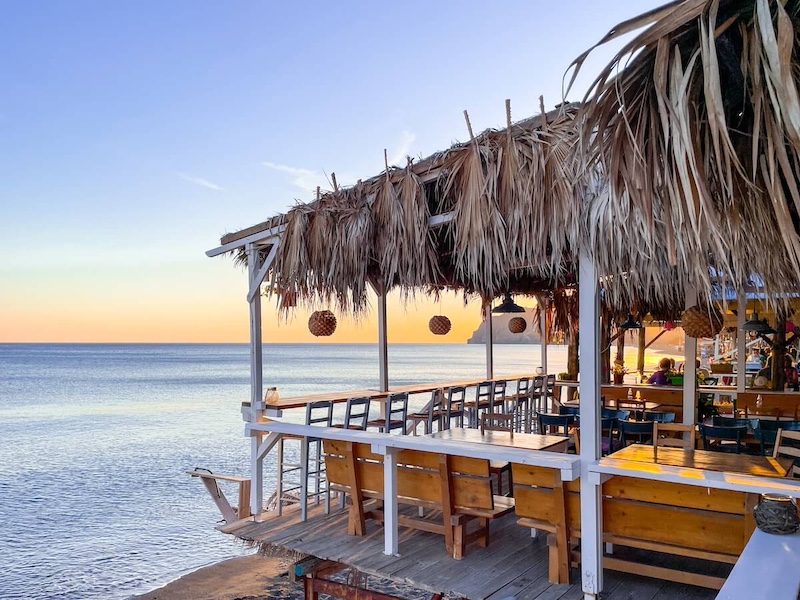
Lesvos – 6/10. Lesvos without a car is a labour of love. It’s also bigger than you think! I based myself in a couple of different places in order to see various things, took a few tours, and still feel like I missed a good chunk of the island. I had to take a few expensive taxis too. There are some parts of the island which are just inaccessible without a car. That said, it’s still worth spending some time there even if you don’t see everything.
More tips on this here: How to Get Around Lesvos by Bus
Lipsi – 9/10. A small island not far from Leros, perfect for those who like small-scale authentic islands. Another one where you don’t need a car or bus, just your own two feet to explore the unpaved roads to beaches around the island. In the summer there are minibuses though, and you can always get a taxi if you don’t want to walk back.
Marathi – 9/10. Part of the Arki archipelago, this is the perfect desert island – one long beach, three tavernas, and some hammocks. I docked a point because there are no scheduled ferries, you have to arrange your own transport from Patmos or Lipsi. But maybe this adds to the adventure?
Meganisi – 7/10. I took a day trip to Meganisi from Nydri on Lefkada. The ferry drops you at Spartachori and there’s enough to divert you for a relaxing day. There is a minibus that coordinates with the ferry and calls at the other villages, pretty good for a tiny island. But you’ll need some form of wheels or a boat to explore the island’s many bays.
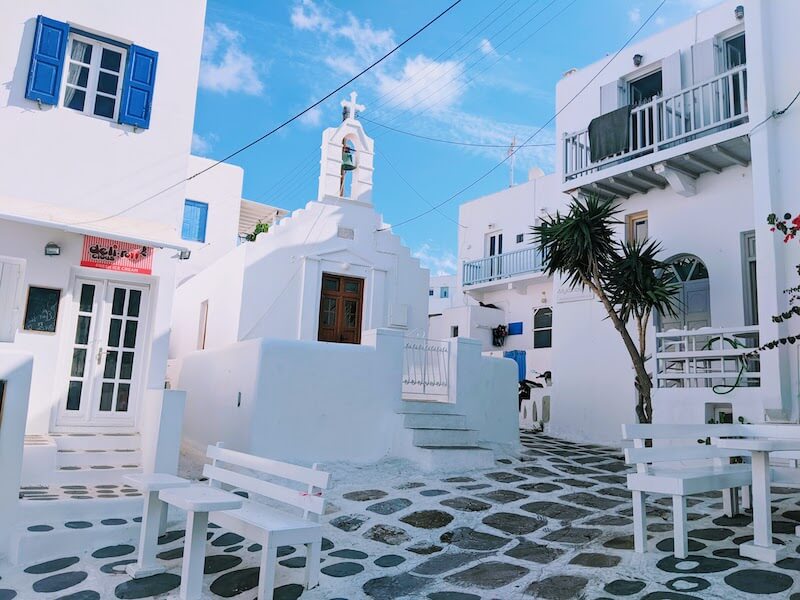
Mykonos – 8/10. I stayed in Mykonos Chora and found it easy enough to explore the beaches on the south coast by bus and water taxi, although I did expect more frequent buses on such a busy island. As with Santorini, large ferries and cruise ships use a newer port that’s a short bus ride away from the main town. Links to the airport are reasonable, but buses to the wilder north coast are less frequent. One downside is that taxis are very expensive and hard to locate.
Naxos – 9/10. Naxos is one of my favourite islands and one of the easiest to visit without a car, partly because a lot of the main destinations are so close together. Ferries dock directly at Naxos Chora which is one of the best harbour towns in Greece, imho, and it’s only a short walk to Agios Georgios beach. Frequent buses run to nearby Agios Prokopios, Agia Anna and Plaka, which are the main beach resort areas on the island, and to the airport. The rest of the island is wild and rugged. You can catch public buses to quieter coastal spots like Moutsouna, or take one of the organised tourist buses which cover two itineraries to the archaeological hotspots and mountain villages. There are also plenty of boat trips on offer from the harbour.
Paros – 9/10. As with Naxos, sister island Paros is very easy to visit without a car. The two main bases in Paros are Parikia, where the ferries arrive, and the cosmopolitan Naoussa. Paros is fairly flat and journey times short, making it easy to travel between Parikia, Naoussa, the airport, and the rest of Paros’ interior and coastal villages. From Pounta, you can catch a quick boat over to Antiparos, and there are many water taxis and boat trips available from both Parikia and Naoussa.
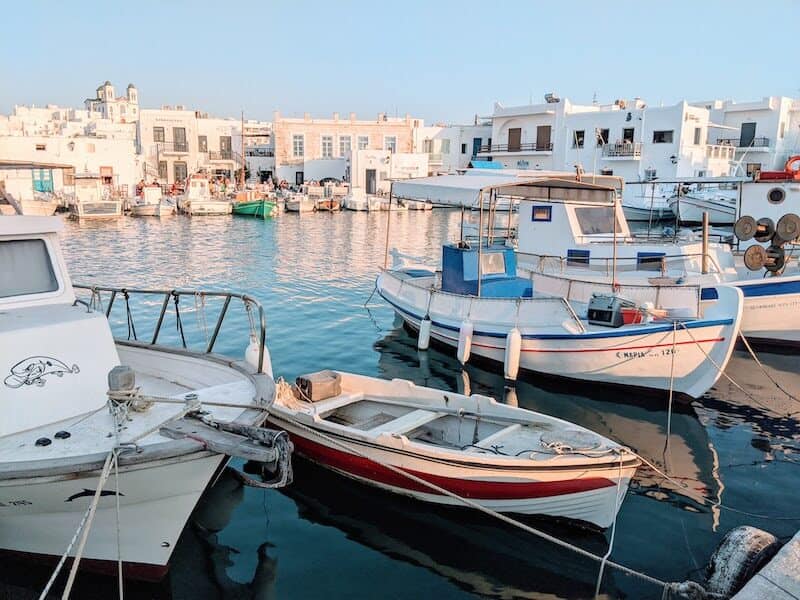
Patmos – 7/10. I love Patmos, I think it’s one of the most beautiful and underrated Greek islands. But tourism there is understandably geared towards helping people travel between Skala, the main port, and the Monastery of St. John in Chora. Extra buses are put on to accommodate visiting cruise ships. It’s not a huge island though, and you can also reach Skala and Grikos by bus. Boat trips tend to take in neighbouring islands and are the best way to reach quiet beaches.
Paxos – 6/10. Paxos is so close to Corfu but sometimes getting there isn’t straightforward, especially if you want to travel straight from the airport. Sometimes there are hydrofoils from Corfu Town, sometimes not and you have to go from Lefkimmi in the south of the island. High-speed ferries are prone to cancellation in rough weather. But it’s a short journey and all ferries arrive at Gaios which is one of the most delightful harbours to sail into. It’s a 15-minute walk into the main part of Gaios. There is a limited local bus service to the other villages on the island – if you’re staying at least a few days it’s fine for a bit of exploring, combined with the available boat trips and water taxis.
Poros – 9/10. If you only have a short amount of time then Poros is a great island to visit without a car. It’s part of the Argo-Saronic group and is a short ferry ride from Athens. It’s also ridiculously close to the mainland, so even if you can’t make the ferry for whatever reason it’s easy to nip over to Galata and get back to Athens by road. It’s a very lush and scenic island. Poros Town occupies a small headland on the south side, looking across the water to Galatas. You can walk or cycle to the beaches and coastal villages along Poros’ south coast. The north side is covered by hilly forest.

Pserimos – 9/10. Pserimos is a tiny island in between Kos and Kalymnos. It’s a popular stop for excursion boats so its minute village and sandy beach momentarily get very busy. There are only a few roads on Pserimos, it’s a barren island with one or two beaches but not much else.
Rhodes – 8/10. The busy island of Rhodes has plenty of buses and all manner of excursions and boat trips, so you won’t be bored without a car. Travel times can be longer than you might expect though. There are a few interesting parts of the island which aren’t very accessible unless you have a car though – mainly in the interior and south-west – which is a shame as there’s plenty of crusader castles and waterfalls that don’t see many visitors, whilst the main attractions like Lindos are very crowded.
More tips on this here: How to Get Around Rhodes by Bus
Santorini – 6/10. Possible but should be better given the number of tourist arrivals here. The buses link main town Fira with the airport, port, and other villages, so unless you’re staying in Fira you’ll have to do some chopping and changing. There are so many interesting places to visit beyond the caldera but it can be a bit of challenge to string different places together. The road along the caldera villages gets insanely jammed. I recommend making the most of boat trips too.
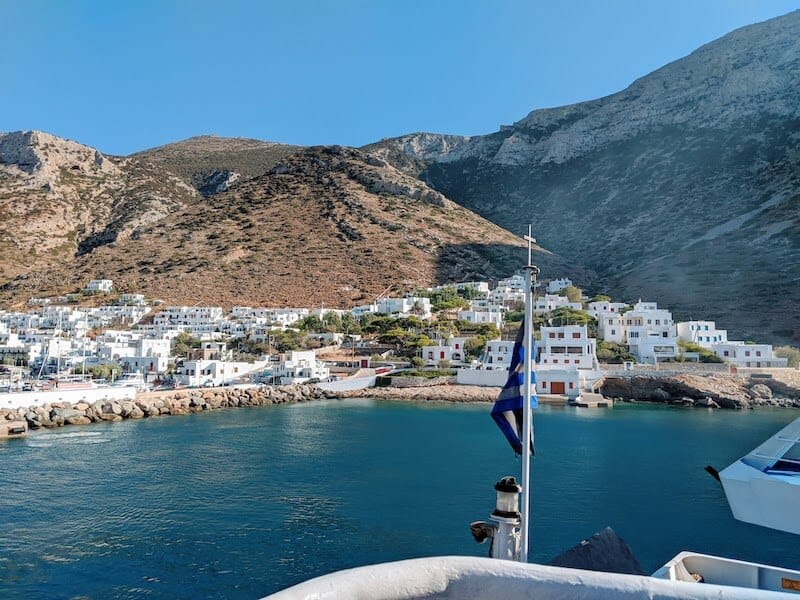
Sifnos – 8/10. A very friendly island to visit without a car. I stayed in picturesque Kamares, a very laid-back beach town which is also where the ferries arrive and depart. The bus shelters here are unusually useful for Greece, with hiking information as well as bus timetables and taxi numbers. You’ll have to change in Apollonia to get around the coast. You can visit most of the villages over the course of a few days.
Skiathos – 8/10. There’s something really straightforward about Skiathos. The international airport is so close to Skiathos Town that you can walk it, and all of the beach resort towns are in a line along the south coast ending at Koukounaries. The downside is this means there’s only one bus route and it does get very busy if you get on at one of the intermediate stops. There are water taxis available too, and boat trips to uninhabited islands and wild beaches. A highlight for me was walking through the pine forests to quieter (but windier) beaches on the north coast. And the Mamma Mia boat trip to Skopelos of course!
Skopelos – 8/10. The ferry journey over to Skopelos Town from Skiathos Town is very easy. Skopelos Town is another one of my favourite towns and a great place to base yourself. However, buses to the other villages and main beaches are frequent and in the summer they run til nearly midnight. Connections to Glossa and Loutraki are less frequent. There are boat trips to Agios Iannis (the Mamma Mia church) and various beaches too. I docked it a few points just because Skopelos Town itself doesn’t have a great beach.
Symi – 9/10. Symi is a small island, there are really only a few places to go beyond Gialos, the main harbour. And most of them are easy to reach by water taxis. There are frequent buses over the hill to Pedi, and also to Panormitis Monastery. You can see most of the island in a relaxed 3 days. The views in Gialos are so good that even if you don’t go anywhere else you’ll feel like you’ve seen a lot. The downside is water taxis are an expensive way to get around, and the cost can really add up if you’re there for a while.
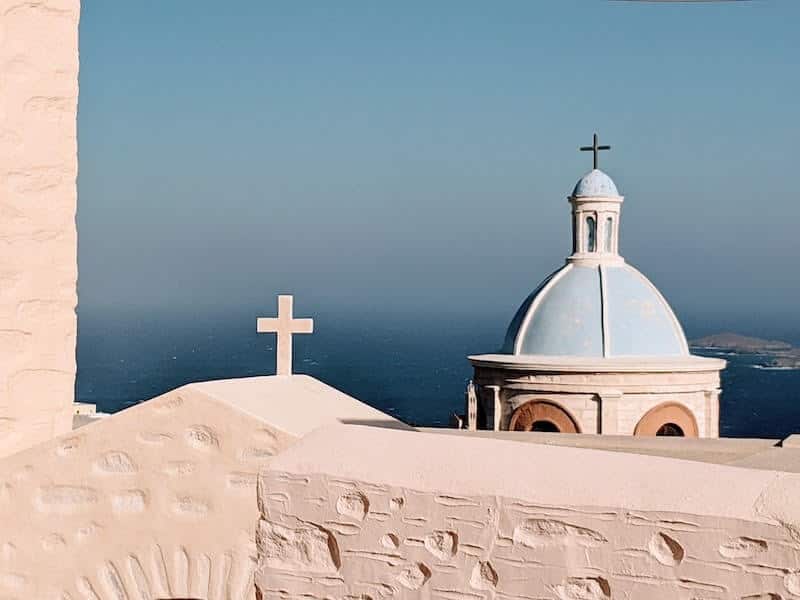
Syros – 9/10. Syros is a small island but an important one. It’s the administrative capital of the Cyclades, and Ermoupoli is an interesting town (although I don’t find it the most relaxing). There’s a great circular bus route that goes clockwise and anticlockwise around the island, calling at the various beaches. The best bit of the island is the beautiful village of Ano Syros up on the hill above Ermoupoli – if you don’t want to walk up there are buses from the harbour.
Zakynthos – 6/10. Another island that should have a better bus service given the number of tourists, although it’s a very package holiday-driven place so most people probably stay put. There are buses between Zakynthos Town and most of the beach resort towns but some are very infrequent. The nicest parts of the island are the north and the Vassilikos Peninsula, both have limited bus service so you’ll need to supplement with taxis, cycling or walking. To see the scenic cliff beaches you’ll need to take a boat or bus trip – make sure you check which ones are open before booking, and also be aware that the excursions don’t necessarily visit the photo spots.
Read more about Greece:
Greek Island Hopping 101 – Everything You Need to Know
Where to Stay in Greece: Ultimate Resort Guide
All images © The Mediterranean Traveller